
Herbs vs. Spices vs. Seeds — Best Uses & Pairings
1) What’s the difference?
Herbs
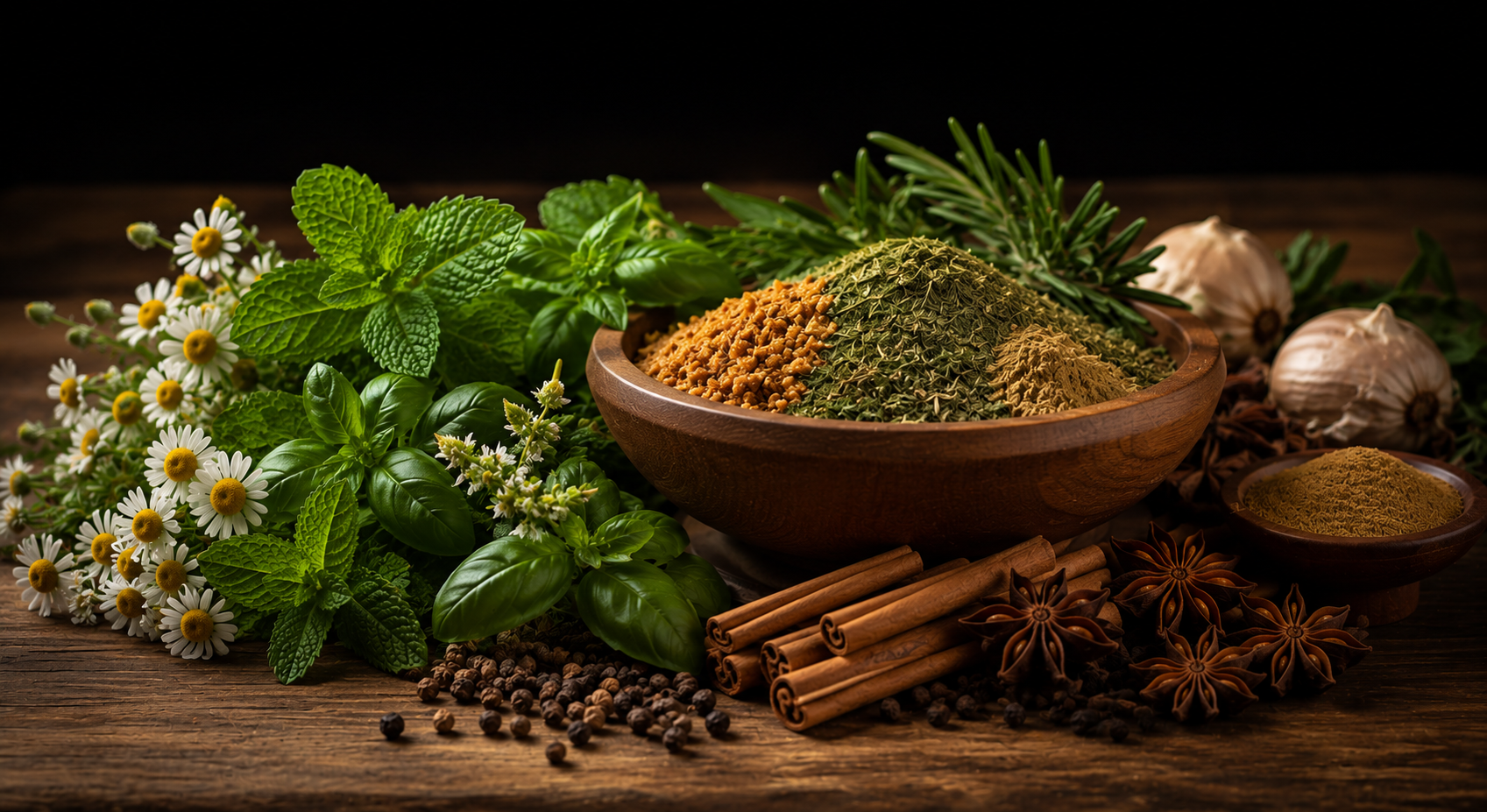
•Leafy parts (basil, mint, dill, parsley).
•Fresh, green, bright aromas—add near the end of cooking.
•Great in salads, sauces, dressings, light sautés.
Spices
•Non-leaf parts: bark/roots/seeds/flowers (cinnamon, clove, turmeric).
•Warmth and depth—often added early to bloom in fat.
•Ideal for stews, curries, marinades, baking.
Seeds
•Whole or ground seeds (coriander, cumin, sesame, nigella).
•Nutty oils & crunch—toast lightly to unlock flavor.
•Top on bread, salads, roasted veggies, dips.
2) Flavor families
Group ingredients by their dominant notes to build balanced dishes:
Fresh/Green
Mint, basil, dill, parsley, coriander leaf.
Warm/Sweet
Cinnamon, cardamom, nutmeg, allspice.
Earthy/Rooty
Turmeric, cumin, fenugreek, ginger.
3) Quick pairings & blends
Everyday grill rub
✓2 cumin : 1 coriander : 1 paprika : ½ black pepper : ½ garlic.
Bright salad finisher
✓Sesame + sumac + dried mint over tomato-cucumber.
Cozy baking mix
✓Cinnamon + clove + cardamom for cakes & cookies.
4) Usage tips
Toast whole spices briefly until fragrant; grind just before use. Add tender herbs at the end to preserve color. Store in airtight containers away from light/heat. For seeds, a quick dry-toast boosts aroma and crunch.
5) FAQ
Whole vs ground?
Whole keeps aroma longer; grind small batches for peak flavor. Ground is convenient for quick marinades and rubs.
How to avoid bitterness?
Do not burn spices—bloom on medium heat with oil/butter; add acids (lemon, yogurt) to balance.
Community Comments